15 July 1799
.
Also know, when was the Rosetta Stone cracked?
In the 19th century, the Rosetta Stone helped scholars at long last crack the code of hieroglyphics, the ancient Egyptian writing system. French army engineers who were part of Napoleon Bonaparte's Egypt campaign discovered the stone slab in 1799 while making repairs to a fort near the town of Rashid (Rosetta).
Beside above, what does the Rosetta Stone say? The Rosetta Stone is a text written by a group of priests in Egypt to honour the Egyptian pharaoh. It lists all of the things that the pharaoh has done that are good for the priests and the people of Egypt. Who deciphered hieroglyphs? Many people worked on deciphering hieroglyphs over several hundred years.
Subsequently, one may also ask, why is the Rosetta stone so important?
The Rosetta Stone is one of the most important objects in the British Museum as it holds the key to understanding Egyptian hieroglyphs—a script made up of small pictures that was used originally in ancient Egypt for religious texts.
How big is the Rosetta Stone?
1.14 m x 72 cm x 27 cm
Related Question Answers
Is Rosetta stone worth?
It has 3 hours worth of native audio, teaches all of the grammar, and all of the vocabulary is in context. It's better than Duolingo and Rosetta Stone. Not only it is not worth the money. It is not worth even the wasted harddrive space for a pirated copy.How many Rosetta stones are there?
The decree has only minor differences among the three versions, so the
Rosetta Stone became key to deciphering Egyptian hieroglyphs, thereby opening a window into ancient Egyptian history.
| Rosetta Stone |
| Created | 196 BC |
| Discovered | 1799 |
| Present location | British Museum |
Is Rosetta Stone legit?
Even though Rosetta Stone is designed to work on its own, I suggest using it in conjunction with other listening and reading material, and most importantly regular practise with native speakers. Despite its faults, it can be a very effective piece of software.Who broke the code of the Rosetta Stone?
Jean-François Champollion (Champollion le jeune; 23 December 1790 – 4 March 1832) was a French scholar, philologist and orientalist, known primarily as the decipherer of Egyptian hieroglyphs and a founding figure in the field of Egyptology.Can anyone read hieroglyphics?
Several people can, though not large numbers. There was a major breakthrough in reading hieroglyphics back in the 1820s, which led to steady progress in the field. Consequently, there's been reasonably comprehensive knowledge of how to read them for a century or more.Who owns the Rosetta Stone?
The stone, which became the key to deciphering ancient Egyptian hieroglyphics, was found by Napoleon's army in 1799 in the Nile delta, but has been in Britain for the past 200 years. It forms the centrepiece of the British Museum's Egyptology collection and is seen by millions of visitors each year.How do you decode hieroglyphics?
Hieroglyphs are written in rows or columns and can be read from left to right or from right to left. You can distinguish the direction in which the text is to be read because the human or animal figures always face towards the beginning of the line. Also the upper symbols are read before the lower.What is the demotic language?
Demotic (from Ancient Greek: δημοτικός dēmotikós, 'popular') is the ancient Egyptian script derived from northern forms of hieratic used in the Nile Delta, and the stage of the Egyptian language written in this script, following Late Egyptian and preceding Coptic.What does the Rosetta Stone tell us about the past?
The inscription on the Rosetta Stone is a decree passed by a council of priests. It shows how much things had changed from earlier times that the priests, the only people who had kept the knowledge of writing hieroglyphs, were now issuing such decrees.What did we learn from the Rosetta Stone?
The Rosetta Stone was the key to unlocking a lost language. By taking something unknown (hieroglyphs) and comparing it to something known (Greek) and somewhat known (demotic), scholars could eventually reconstruct how that language worked. We can do the same thing today with the documents we use.Who built obelisks?
ANCIENT EGYPTIANS
What does Rosetta Stone cost?
Rosetta Stone's roster boasts 28 languages, and can cost anywhere from $80 to $250 (without discounts.) It's available on Windows, Mac, iOS, and Android devices.What is the Rosetta stone made of?
Granodiorite
What is the difference between hieroglyphics and demotic script?
Generally, Hieroglyphics were used for monumental inscriptions and decorative texts, and Hieratic was used for administrative texts which placed more importance in content than appearance, which were written by hand, and which needed to be written quickly. Demotic writing developed around 600 BC.What is meant by Rosetta Stone?
noun. a stone slab, found in 1799 near Rosetta, bearing parallel inscriptions in Greek, Egyptian hieroglyphic, and demotic characters, making possible the decipherment of ancient Egyptian hieroglyphics.How were natural mummies created?
Mummification. The earliest ancient Egyptians buried their dead in small pits in the desert. The heat and dryness of the sand dehydrated the bodies quickly, creating lifelike and natural 'mummies'. However, they realised that bodies placed in coffins decayed when they were not exposed to the hot, dry sand of the desertWhat was written on the Rosetta Stone How did historians manage to decode the Rosetta Stone?
How did historians manage to decode the Rosetta Stone? The Rosetta Stone contained a decree honoring Ptolomy V. A French scholar found the names of Ptolomy and Cleopatra in Demotic, and was able to match these to the Greek writing. This is when it was discovered that the same information written in three languages.What are the pyramids used for?
Pyramids. The ancient Egyptians built pyramids as tombs for the pharaohs and their queens. The pharaohs were buried in pyramids of many different shapes and sizes from before the beginning of the Old Kingdom to the end of the Middle Kingdom. There are about eighty pyramids known today from ancient Egypt.What does the Rosetta Stone look like?
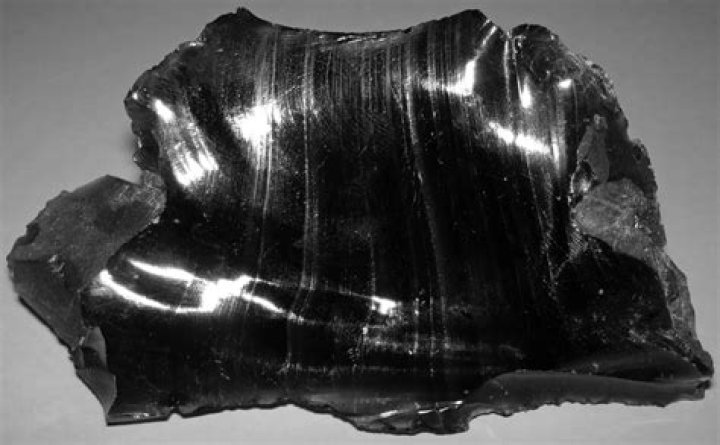
An irregularly shaped stone of black granite 3 feet 9 inches (114 cm) long and 2 feet 4.5 inches (72 cm) wide, and broken in antiquity, it was found near the town of Rosetta (Rashīd), about 35 miles (56 km) northeast of Alexandria. It was discovered by a Frenchman named Bouchard or Boussard in August 1799.